

Editorial Team · on 15 June 2026 · 10 min read · Last reviewed 15 June 2026
Champions League soccer standings track the performance of Europe’s top football clubs in the annual continental competition, determining progression through the knockout stages.
Key facts
- Champions League standings are based on points accumulated during the group stage (3 wins = 3 points, 1 draw = 1 point).
- The top two teams from each of the eight groups advance to the round of 16.
- If teams are tied on points, tiebreakers are used in this order: head-to-head points, head-to-head goal difference, away goals scored, goals scored, away goals scored, disciplinary points, UEFA coefficients.
- The Champions League winner earns automatic qualification for the next year’s competition, along with the runner-up if they haven’t already qualified through their domestic league.
- Since its inception, only eight clubs have won the Champions League more than once, demonstrating the elite nature of the competition.
- Real Madrid holds the record for the most Champions League titles, with 14 as of 2023.
How are Champions League standings calculated?
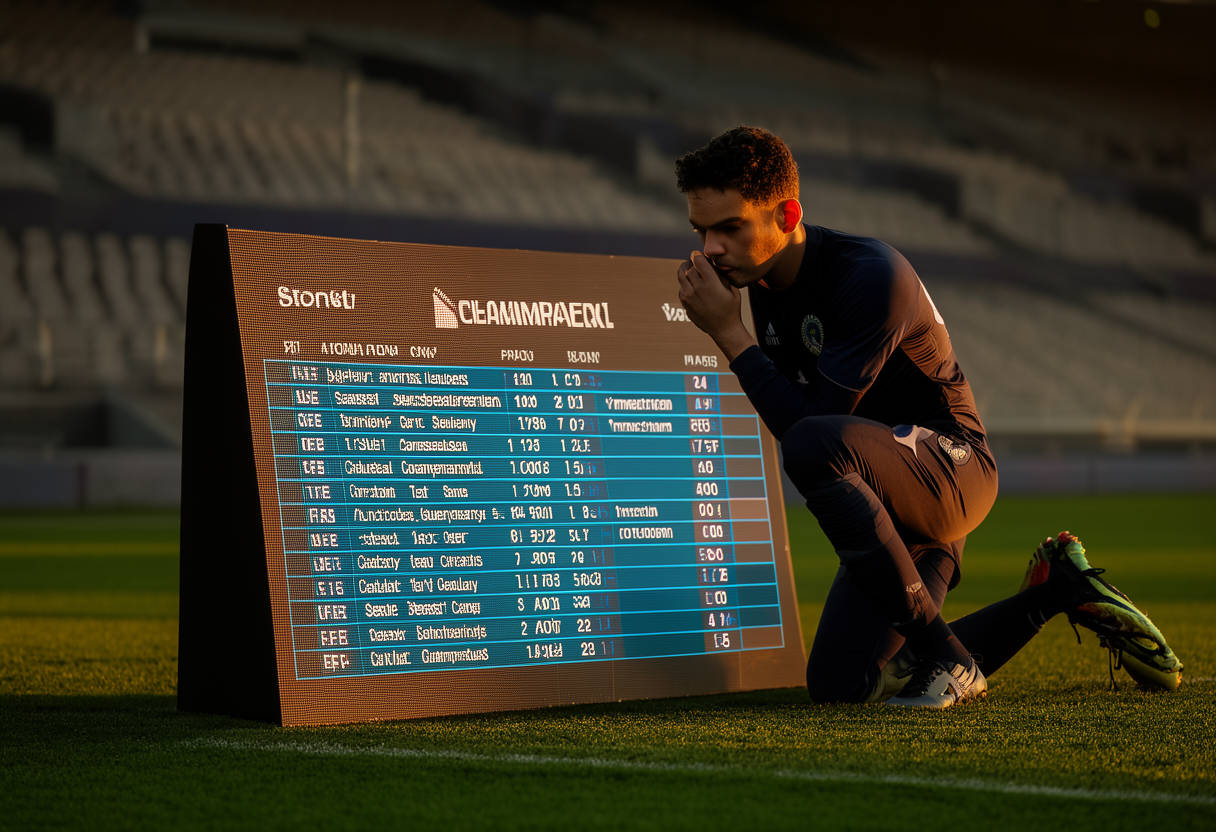
During the group stage, teams play home and away matches against each of the other three teams in their group. Points are awarded as follows: three for a win, one for a draw, and none for a loss. The Champions League standings for each group are then calculated based on these points, with the top two teams advancing to the knockout stage.
The initial rankings are based on total points. If two or more teams are equal on points, the following tiebreakers are applied in order: (1) head-to-head points, (2) head-to-head goal difference, (3) away goals scored in head-to-head matches, (4) total goal difference, (5) total goals scored, (6) away goals scored in total, (7) disciplinary points (red card = 3 points, yellow card = 1 point, two yellow cards in one match = 3 points), and (8) UEFA club coefficients. These coefficients are based on the performance of a club in European competitions over the past five seasons.
For example, in the 2022-23 season, Paris Saint-Germain topped their group with 16 points, followed by Bayern Munich with 13 points. Benfica and Celtic finished third and fourth, respectively, with 5 and 4 points. The use of tiebreakers can significantly impact the final standings, as seen in previous seasons where teams have advanced or been eliminated based on away goals or disciplinary points.
What happens after the group stage in Champions League standings?
After the group stage, the top two teams from each of the eight groups advance to the round of 16. The Champions League standings at this point determine the knockout stage pairings. The group winners are seeded and drawn against the runners-up from a different group, with the seeded team hosting the second leg. The draw also determines which teams will play at home first in the quarter-finals and semi-finals.
The knockout stage follows a two-legged format, with each team hosting one match. If the aggregate score is tied after both matches, the away goals rule is applied. If still tied, extra time and a penalty shootout are used to determine the winner. The Champions League standings for the knockout stage are not based on points but on the results of these matches. For instance, in the 2021-22 season, Liverpool advanced to the final after a dramatic penalty shootout against Villarreal, highlighting the intensity and unpredictability of the knockout stages.
The Champions League final is a single match played at a neutral venue, with the winner crowned European champions. The final is one of the most-watched sporting events globally, attracting millions of viewers and featuring star players from around the world. The 2023 final between Manchester City and Inter Milan drew over 400 million viewers, showcasing the global appeal of the competition.
How do Champions League standings affect qualification for the next season?
The Champions League winner earns automatic qualification for the next season’s competition, as do the runners-up if they haven’t already qualified through their domestic league performance. Additionally, the third-placed team may qualify for the UEFA Europa League, provided that the domestic league champions and runners-up have not already qualified for the Champions League and the Europa League winner has not qualified for the Champions League.
The Champions League standings also impact the UEFA coefficients, which determine the number of teams that qualify for the competition from each association. A strong performance in the Champions League can lead to more qualification spots for a country’s clubs in future seasons. For example, England’s strong performances in recent years have earned them four qualification spots in the Champions League, allowing more Premier League teams to participate in the competition.
Moreover, the Champions League winner and runner-up receive automatic entry into the next season’s group stage, while the third-placed team enters the play-off round. This provides a significant advantage to these teams, as they avoid the qualification rounds and secure their place in the competition earlier. The financial benefits of participating in the Champions League also incentivize clubs to perform well, with prize money and increased revenue from television broadcasts and sponsorships.
Think of the Champions League standings like a school league table. Teams earn points for wins and draws, and the top teams move on to the playoffs. Just as in school sports, if teams are tied, there are specific rules to decide who moves forward. The ultimate goal is to win the championship and secure a spot in the next year’s competition, just like a sports team that wins their conference gets a shot at the state title the following year.
How do Champions League standings compare to other competitions?
Unlike domestic league standings, which are based on a full season of matches, Champions League standings are only based on the group stage matches. This means that a team’s performance in the early stages of the competition can significantly impact their chances of advancing. Additionally, the knockout stage is based on aggregate scores over two legs, rather than points accumulated throughout the season.
In contrast to the UEFA Europa League, the Champions League standings are more competitive, as the top clubs from each European country participate. The Europa League includes lower-ranked teams from higher-ranked associations, as well as winners from lower-division European competitions. This makes the Champions League standings a more prestigious and closely watched competition. For example, the Champions League final typically draws a larger global audience than the Europa League final, reflecting its higher status in European football.
The Champions League also differs from domestic leagues in terms of scheduling and format. While domestic leagues typically follow a double round-robin format, the Champions League features a group stage followed by a knockout tournament. This format adds an element of unpredictability and excitement, as teams must perform consistently across different stages of the competition. The Champions League’s unique structure and prestige make it one of the most anticipated and closely followed sporting events in the world.
How can teams improve their Champions League standings?
To improve their Champions League standings, teams must focus on securing wins and draws during the group stage. This can be achieved through strong defensive play, clinical finishing, and effective tactical strategies. Additionally, teams should aim to win their home matches, as home advantage can significantly impact the outcome of games. For instance, teams like Manchester City and Bayern Munich have consistently performed well at home, using their home crowds to gain an edge over their opponents.
Teams should also pay close attention to their head-to-head records, as these can be crucial in determining their standings if they are tied on points. By securing wins in head-to-head matches, teams can gain an advantage in the tiebreakers and improve their chances of advancing to the knockout stage. For example, in the 2020-21 season, Atlético Madrid advanced to the knockout stage based on their head-to-head record against Bayern Munich, despite finishing with the same number of points.
Finally, teams should focus on their overall performance throughout the season, as a strong domestic league campaign can boost their UEFA coefficients and increase their chances of qualifying for the Champions League in future seasons. Investing in player development, scouting, and tactical innovation can also help teams stay competitive in the Champions League. For example, teams like Liverpool and Chelsea have used a combination of youth development and strategic signings to maintain their competitiveness in European competitions.
What role do UEFA coefficients play in Champions League standings?
UEFA coefficients are a crucial factor in determining the Champions League standings and the number of teams that qualify for the competition from each association. These coefficients are based on the performance of a club and its national association in European competitions over the past five seasons. A higher coefficient can result in more qualification spots for a country’s clubs, providing them with a greater chance to participate in the Champions League.
The UEFA coefficient system ensures that the Champions League remains competitive and inclusive, allowing clubs from smaller associations to qualify for the competition based on their performance. For example, teams from countries with lower coefficients, such as Portugal and Belgium, have consistently performed well in the Champions League, earning more qualification spots for their domestic leagues. The UEFA coefficient system also incentivizes clubs to perform well in European competitions, as a higher coefficient can lead to increased revenue and prestige.
To calculate the UEFA coefficients, points are awarded based on a club’s performance in the Champions League, Europa League, and Europa Conference League. The points are then aggregated to determine the coefficient for each club and national association. For instance, a victory in the group stage of the Champions League is worth four coefficient points, while a draw is worth two points. These points are accumulated over a five-year period, with the most recent season carrying the most weight. The UEFA coefficient system is regularly reviewed and updated to ensure its fairness and relevance in European football.
Key steps for tracking Champions League standings
- Identify the teams in your group and familiarize yourself with their strengths and weaknesses.
- Follow the group stage matches closely, keeping track of points, goal differences, and head-to-head records.
- Use the tiebreakers to determine the standings if teams are tied on points.
- Monitor the knockout stage draws and results, as these will impact the standings for the quarter-finals, semi-finals, and final.
- Stay up-to-date with the latest news and analysis from Champions League Soccer Standings: Current Table & Points and other reliable sources to ensure you have the most accurate and comprehensive information.
- Track the UEFA coefficients for each club and national association, as these can impact the number of qualification spots available for the Champions League.
- Analyze the performance of individual players and teams, as this can provide insights into their chances of advancing in the competition.
For soccer fans, staying informed about Champions League standings is essential to understanding the competition’s progression and predicting the outcome of matches. By following the key steps outlined above and utilizing resources like Champions League Soccer Standings: Current Table & Points, fans can gain a deeper appreciation for the sport and its most prestigious club competition. Additionally, tracking the UEFA coefficients and analyzing player performance can provide valuable insights into the dynamics of the Champions League and its impact on European football.
Frequently asked questions
How are points awarded in the Champions League group stage?
Teams earn 3 points for a win, 1 for a draw, and 0 for a loss. After six group stage matches, teams are ranked by total points. If points are tied, tiebreakers include head-to-head results, goal difference, and goals scored. For example, if two teams have identical points, the one with a better head-to-head record advances.
What happens if multiple teams finish with the same points?
Tiebreakers are applied in order: head-to-head points, head-to-head goal difference, head-to-head goals scored, away goals scored in head-to-head matches, and finally club coefficient. For instance, if three teams tie on points, their mutual results determine the standings. This system ensures fairness and clarity in ranking.
How do the top teams from each group advance?
The top two teams from each of the eight groups advance to the round of 16. The third-placed teams enter the Europa League knockout round play-offs. For example, if Bayern Munich tops Group A and Manchester City finishes second, both advance directly to the next stage of the Champions League.
Can a team with fewer points but better goal difference advance?
No. Points are the primary criteria. Goal difference and goals scored only come into play if teams are tied on points. For example, a team with 10 points and a +5 goal difference will advance over a team with 10 points and a +3 goal difference only if all other tiebreakers are equal.